
Design is a way of paying attention.
A perspective on organic architecture, built around place, human experience, material integrity and a willingness to think beyond predetermined styles.
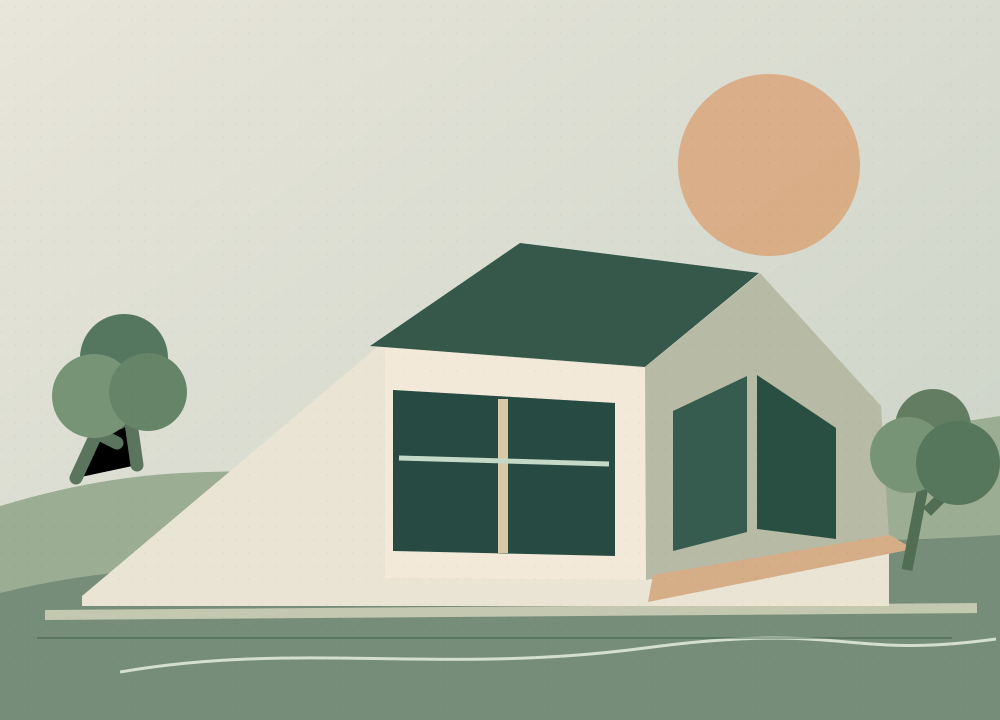
Architecture becomes coherent when its many decisions serve a shared purpose.
What does the site ask of us?
Every piece of land has a different story: orientation, topography, water, vegetation, neighboring structures and the patterns of everyday life around it. A responsive design begins by reading these conditions carefully.
In Atlanta and throughout the American Southeast, summer sun, rainfall and seasonal changes can shape questions about shade, openings and outdoor rooms. These are general design considerations, not claims about a specific completed project.
How should the building feel to inhabit?
Experience unfolds through movement. Entry, pause, view, gathering, privacy and light all influence the character of a space. Plans and elevations are essential tools, but they represent moments in a much longer human experience.
A well-considered sequence of rooms can create clarity without sacrificing surprise.
What can materials honestly express?
Materials carry weight, texture, history and limitations. Rather than using a finish as decoration alone, thoughtful architecture considers how its physical properties contribute to structure, comfort and atmosphere.
Material restraint can be as expressive as an elaborate formal gesture.
What deserves to remain open?
Good ideas are tested. A design process can retain room for discovery while still respecting program, budget, code requirements and the practical realities of construction.
Originality is not novelty for its own sake. It is the thoughtful response to circumstances that cannot be answered by a formula.
Understanding the approach.
Introductory answers about the ideas explored in this site.